How does the mechanism of insurance for construction defects work in Saudi Arabia?
2026-08-04
989 Views
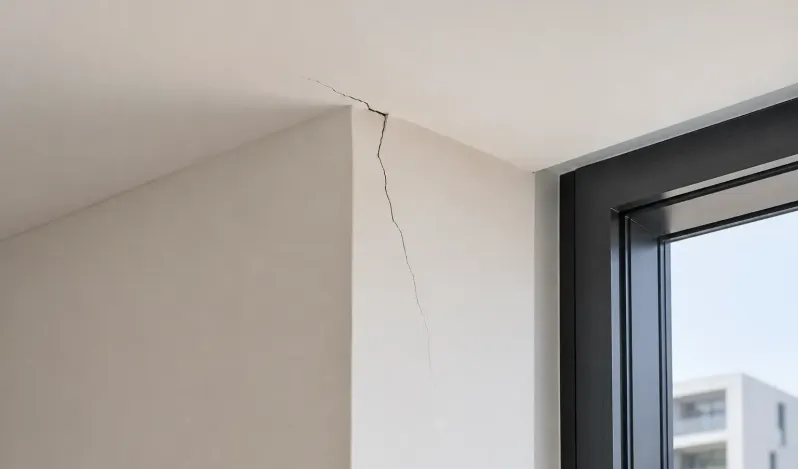


If you have read our general guide to the legal warranty when buying property from developers, you know that the structural framework is covered for 10 years. But the most important practical question is: How is this protection actually activated when a defect appears? And who is specifically responsible among the contractor, engineer, and designer? This guide delves specifically into the mechanism of mandatory insurance that stands behind the 10-year period, and how it works from the inside.
- Who are the specifically responsible parties?
- Mandatory insurance mechanism: How does it work from the inside?
- The difference between structural defects and finishing defects
- How to make sure the insurance policy is actually effective (not just formal)?
- How does Imtilak Global help you?
- Frequently asked questions about the mechanism of insurance on structural defects
Who are the specifically responsible parties?
Contrary to popular belief that the "developer" alone is responsible, legal liability for structural defects is joint among several parties:
How many living rooms are in the apartment?

The contractor who executes the construction works.
The designer/engineer responsible for the engineering design.
The supervising engineer who oversees the execution of works on site.
The construction inspector, if present during the project stages.
The practical effect of this joint responsibility: As an affected owner, you do not have to prove exactly which party made the mistake; all four parties are collectively responsible before you, which greatly simplifies your legal position compared to making a claim against just one entity.
Mandatory insurance mechanism: How does it work from the inside?
This is where the fundamental difference lies between "having a warranty on paper" and "actually activating it." The system obliges the responsible parties to provide an insurance policy in favor of the owner covering the entire warranty period (up to 10 years), either through a group insurance policy for the entire project or separate policies with the same insurance company.
The most important step in the mechanism is that when a defect appears, you do not wait for a lengthy investigation to determine responsibility first. Instead, a settlement mediator—a technical and financial assessor appointed by the insurance company itself—intervenes to verify the validity of the insurance policy for the case. Based on this, repair works can start immediately, in parallel with determining responsibility among the parties later, not before.
This means that as an owner, your first contact when a defect appears should not be limited to contacting the developer and waiting, but should include ensuring the activation of the settlement mediator process specifically, as it is the path designed to speed up actual repairs.

The difference between structural defects and finishing defects
This point is often confused: Not every problem that appears after handover is a structural defect covered by the 10-year warranty.
Get a free real estate consultation
What is your preferred way of communication? How would you like to be contacted?

Get a free real estate consultation
Choose the appropriate day for us to contact you
Structural Defect | Finishing Defect | |
|---|---|---|
Nature | Affects the safety and structural stability of the building (structural cracks, weak foundations) | Surface problems (paint, tiling, interior finishes) |
Warranty period | Up to 10 years | A shorter period specified by the purchase contract or specifically by the developer |
Claim mechanism | Through the insurance policy and settlement mediator | Usually directly with the developer according to the contract terms |
Before signing, make sure to know the warranty period for each type separately in your contract, and do not settle for a general phrase like "there is a warranty."
How to make sure the insurance policy is actually effective (not just formal)?
Start a chat
Talk to us on your favorite channel







Request an actual copy of the insurance policy against hidden defects, not just verbal confirmation of its existence.
Verify the name of the insurance company and contact them directly to ensure the policy specifically covers your unit (not just the project in general without including your unit).
Ask specifically about the mechanism for contacting the settlement mediator, not just a general maintenance channel belonging to the developer.
Verify the classification of the contractor officially, as they are one of the four jointly responsible parties.
How does Imtilak Global help you?
هل أنت جاهز للاستثمار؟ ما هو نوع الشقة المفضل لك؟
 استديو
 غرفة نوم واحدة
 غرفتين نوم
 3 غرف نوم أو أكثر
حدد المنطقة
At Imtilak Global, we do not just make sure that a warranty exists on paper, but we help you verify that the insurance policy is actually valid for your specific unit, the classification of the contractor, and the mechanism for contacting the settlement mediator, to ensure that your legal protection can actually be activated when needed, not just a formal clause in the contract.
Frequently asked questions about the mechanism of insurance on structural defects
Is the developer the only one responsible for structural defects?

No, responsibility is joint among the contractor, designer, supervising engineer, and construction inspector together, not just the developer as a general term.
Should I wait for responsibility to be determined before starting to repair a structural defect?
No, thanks to the mandatory insurance mechanism, the settlement mediator verifies the validity of the policy and repairs can start immediately, in parallel with determining final responsibility among the parties.
How many living rooms are in the apartment?
What is the difference between a structural defect claim and a finishing defect claim?
A structural defect is claimed through the insurance policy and the approved settlement mediator, while a finishing defect is usually claimed directly with the developer according to the contract terms, with a shorter and separate warranty period.
How can I make sure that my specific unit is covered by the insurance policy, not just the project in general?
Get a free real estate consultation
What is your preferred way of communication? How would you like to be contacted?
Get a free real estate consultation
Choose the appropriate day for us to contact you
Contact the insurance company mentioned in the policy directly to ensure your unit is covered by name, and do not just settle for knowing that "the project is insured" in general.
Do you like this topic? You can share it with your friends now!


Do you like this topic? You can share it with your friends now!
Need real estate help?
Consult with our specialist