Property management and leasing for non-resident foreign investors
2026-08-03
1,532 Views



Owning property in Saudi Arabia while not residing there raises the question: after completing the purchase, who will manage the property? How can you document lease contracts while abroad? And how will you receive rental returns? In this guide, we explain the available options for managing and renting out your property remotely with confidence and legal security.
- Ejar Platform: Mandatory Documentation for All Lease Contracts
- Property Management Options for Non-Resident Investors
- Option One: Legal Power of Attorney to a Trusted Person
- Option Two: Licensed Property Management Company
- What Do Property Management Companies Usually Offer?
- Local Bank Account and Transfer of Returns
- Financial Obligations on Rental Income
- Tips for Successfully Managing Your Property Remotely
- Frequently Asked Questions about Property Management for Non-Resident Investors
Ejar Platform: Mandatory Documentation for All Lease Contracts
Every lease contract in Saudi Arabia must be documented through the Ejar Platform affiliated with the General Real Estate Authority. It is the official platform that regulates the relationship between landlord and tenant and protects the rights of both parties. The documentation process is linked to the landlord's national ID or residency number, which means that a non-resident owner usually needs one of two paths:
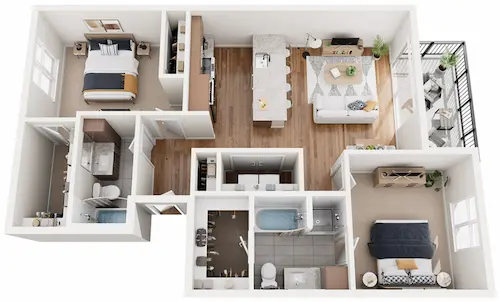
How many living rooms are in the apartment?

Appointing a representative or legal agent (via a notarized power of attorney) to manage the documentation process on their behalf.
Engaging a licensed property management company that handles these procedures as part of its full service package.
⚠️ Accuracy Notice: The mechanism for registering lease contracts through the Ejar Platform, specifically for non-residents (without valid residency), requires additional steps that must be directly verified with the General Real Estate Authority or a specialized legal advisor before any actual leasing commitment.
Property Management Options for Non-Resident Investors
Here are the main options available to non-resident investors in Saudi Arabia for managing their property:
Option One: Legal Power of Attorney to a Trusted Person
A non-resident owner can notarize a legal power of attorney (through a notary public or an approved electronic platform) in favor of a trusted person (relative, friend, or lawyer) to manage the property on their behalf by signing lease contracts, receiving payments, and following up on basic maintenance. This option may be less costly but requires a high level of trust in the agent and regular follow-up by the owner.

Option Two: Licensed Property Management Company
The most common and professional option for non-resident investors is to have a licensed property management company handle all operational aspects of the property on behalf of the owner, in exchange for a percentage of the rental returns or a fixed monthly fee.
Get a free real estate consultation
What is your preferred way of communication? How would you like to be contacted?

Get a free real estate consultation
Choose the appropriate day for us to contact you
What Do Property Management Companies Usually Offer?
Marketing the unit and finding suitable tenants, including screening potential tenants.
Documenting the lease contract through the Ejar Platform on behalf of the owner.
Collecting periodic rent and transferring it to the owner via bank transfer.
Following up on routine and emergency maintenance for the property, and coordinating with local service providers.
Handling any rental disputes through approved legal channels (Rental Dispute Settlement Committees).
Periodic reports for the owner on the property status and achieved returns.
Local Bank Account and Transfer of Returns
Start a chat
Talk to us on your favorite channel







To facilitate receiving rental returns, it is advised for the non-resident investor to open a local bank account in Saudi Arabia (which is also a general requirement for non-Saudi ownership as explained in our previous guides). The property management company usually transfers the net return after deducting its fees and maintenance expenses to this account periodically, from which the owner can transfer funds internationally according to applicable banking regulations.
Financial Obligations on Rental Income
Are you ready to invest? Which apartment type do you prefer?
 Studio
 One bedroom
 Two bedrooms
 3 bedrooms or more
Select region
The foreign investor must verify their financial obligations related to rental income, which may include certain taxes or fees depending on their status (individual or company) and their tax situation in their home country as well (possible double taxation).
⚠️ Important Notice: Tax obligations on rental income for non-residents require specialized tax consultation for each individual case, and it is not possible to generalize a single rate or obligation for all investors. We strongly advise consulting a licensed tax advisor before relying on any general figure or percentage.
Tips for Successfully Managing Your Property Remotely

Document all agreements in writing, whether with the agent or the management company, with clear terms for fees and authorities.
Request regular periodic reports (monthly or quarterly) on the property status and achieved returns.
Verify the property management company's license with the General Real Estate Authority before contracting.
Plan regular on-site visits if possible, or use periodic virtual property tours to check on the property's condition.
Keep digital copies of all documents (documented lease contract, title deed, property management agreement) in a place accessible from anywhere in the world.
At Imtilak Global, our relationship with our clients does not end upon purchase completion. We guide you to trusted partners for property management, help you notarize the necessary legal powers of attorney, and follow up on your property remotely with confidence, to achieve a sustainable investment return without the need for constant presence in the Kingdom.
How many living rooms are in the apartment?
Frequently Asked Questions about Property Management for Non-Resident Investors
Can I rent out my property in Saudi Arabia while being completely abroad?
Yes, through a notarized legal power of attorney to a trusted person, or by engaging a licensed property management company to handle all procedures on your behalf.
Get a free real estate consultation
What is your preferred way of communication? How would you like to be contacted?
Get a free real estate consultation
Choose the appropriate day for us to contact you
Does the lease contract need to be officially documented?
Yes, through the official "Ejar" platform affiliated with the General Real Estate Authority. It is a mandatory procedure to protect the rights of both landlord and tenant.
How do I receive rental returns while I am outside Saudi Arabia?
Usually through a local bank account you open in Saudi Arabia. The property management company or your agent transfers the net return to it periodically, from which you can transfer it internationally as needed.
Does the property management company handle disputes with the tenant?
Yes, licensed property management companies usually handle any disputes through the approved legal channels on behalf of the owner.
Do you like this topic? You can share it with your friends now!


Do you like this topic? You can share it with your friends now!
Need real estate help?
Consult with our specialist