Geographical areas for foreign freehold property ownership in Saudi Arabia
2026-07-26
1,466 Views
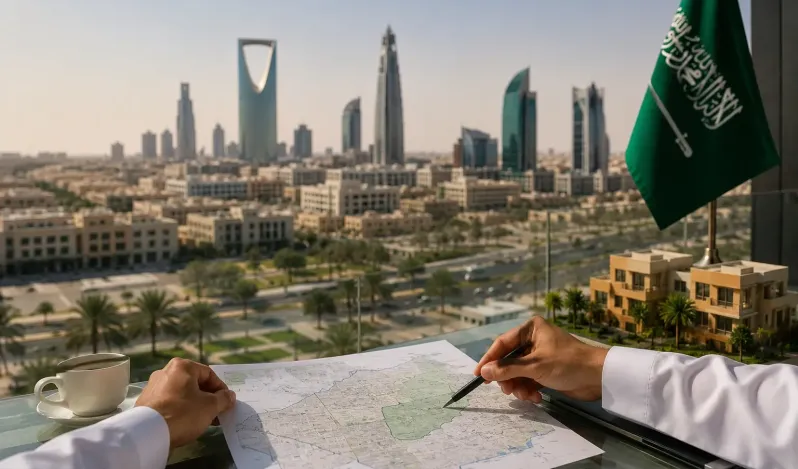


The geographical scope is the first and most important factor for any freehold property ownership decision for non-Saudis in the Kingdom. The system does not grant the right of ownership in every part of Saudi lands, but rather restricts it within an official document issued by a Cabinet decision that precisely determines where ownership is allowed, at what percentage, and what type of real rights. In this guide, we explain how this mechanism works across the entire Kingdom, and direct you to the details of each major city separately.
- What is the Geographical Scope Document?
- Ownership is Not Open Everywhere
- Geographical Scopes in Major Cities
- Areas Completely Excluded from Ownership
- Types of Properties Available Within Approved Scopes
- How to Check the Scope of a Specific Property Before Buying?
- Frequently Asked Questions about Geographical Scopes for Foreign Ownership
What is the Geographical Scope Document?
The Geographical Scope Document is the official document issued by a Cabinet decision, complementing the system for non-Saudis’ property ownership and its executive regulations. It precisely defines the areas where ownership is permitted for non-Saudis across the entire Kingdom. According to the General Real Estate Authority, this document includes the scopes of non-Saudis’ ownership in Riyadh, Jeddah, Makkah, Madinah, and all cities and governorates of the Kingdom, with maps of specific locations detailing the allowed ownership percentages, types of rights acquired, grace periods, and the regulations associated with each scope.
At the national level, the approved scopes include a number of major projects, development destinations, and special economic zones, distributed across specific sites within 13 administrative regions in the Kingdom. Some media sources indicate that the document contains about 170 geographical scopes for ownership across the Kingdom, distributed between major cities and other regions.
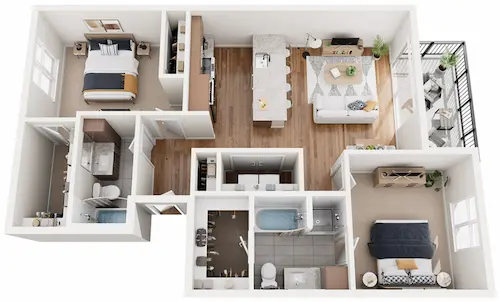
How many living rooms are in the apartment?

The Cabinet decision regarding geographical scopes specifies five main elements for each scope: the geographical area where ownership is permitted, the types of real rights that may be acquired, the allowed ownership percentages, the grace periods associated with each right, and the specific regulations for each area.
Ownership is Not Open Everywhere
It is important to understand that including a city in the scope document does not mean ownership is permitted throughout its entire area. The document operates on the logic of detailed maps at the neighborhood or development area level, not the city as a whole. In other words, some neighborhoods of a certain city may be within the permitted scope, while other neighborhoods in the same city remain completely outside this scope.
The nature of the real right that can be acquired also varies from one scope to another. Some areas allow full ownership, while others (especially in Makkah and Madinah) are limited to usufruct rights for a specified period, not full ownership.
Read also: Investment Properties for Sale in Riyadh
Geographical Scopes in Major Cities
Here is a quick look at the geographical scopes in the major cities:
Riyadh
The capital includes wide scopes covering prominent strategic development sites such as Diriyah Gate, King Salman Park, Sedra District, King Abdullah Financial District (KAFD), the vicinity of King Salman International Airport, as well as emerging investment neighborhoods like Al Aaredh and Al Narjis District and North Riyadh within urban expansion plans. Some scopes around public transport network stations (transit-oriented development) are of special importance as they combine high investment value with ease of mobility.
Jeddah
Jeddah enjoys the widest geographical representation in the document compared to any other city, with its scopes including the historic city center as well as 55 development areas distributed across the governorate. This makes it, along with Riyadh, one of the largest cities in terms of the number of approved scopes.
Get a free real estate consultation
What is your preferred way of communication? How would you like to be contacted?

Get a free real estate consultation
Choose the appropriate day for us to contact you
Makkah and Madinah
The nature of ownership in the two holy cities is fundamentally different from the rest of the Kingdom. Ownership there is restricted to Saudi companies and Muslim individuals, with usufruct rights specifically defined in accordance with the special status of the two cities, instead of the full ownership available in other cities. Examples of approved scopes in Makkah include Makkah Towers, Al Manar, Ajyad Tower, King Salman Gate, Jabal Omar, Sama Suburb, and Makkah 1 and 2, among other scopes.
Other Cities Within Scope
Start a chat
Talk to us on your favorite channel







In addition to the four main cities, the Geographical Scope Document includes other cities and governorates with economic significance, most notably Dammam and Khobar, within approved areas that offer advanced infrastructure and integrated urban development projects.
Areas Completely Excluded from Ownership
In addition to the boundaries of Makkah and Madinah, which are governed by special regulations as explained above, the Geographical Scope Document completely excludes other areas for security and strategic reasons:
- Border areas: Ownership is prohibited in villages, cities, and spaces within the Kingdom’s border zone.
- Military sites: Ownership is forbidden in properties near military bases or vital security facilities.
- Sites prohibited for national security reasons: Areas designated by the state for security requirements, where no real estate transaction by non-Saudis is permitted.
Are you ready to invest? Which apartment type do you prefer?
 Studio
 One bedroom
 Two bedrooms
 3 bedrooms or more
Select region
Types of Properties Available Within Approved Scopes
Within the approved geographical scopes, the ownership available to non-Saudis usually includes residential apartments of various categories, villas and independent residential units, units within integrated residential complexes, and mixed-use projects that include a residential component. These opportunities are mostly concentrated in economically significant cities such as Riyadh, Jeddah, and Khobar, where advanced infrastructure and a stable investment environment support long-term growth.
How to Check the Scope of a Specific Property Before Buying?
The most important practical step before any purchase commitment is to verify the geographical status of the specific property, through:
- Official Saudi Real Estate Portal: The unified, approved platform for reviewing geographical scopes, verifying eligibility, and submitting ownership requests.
- Interactive geospatial maps: These precisely define the boundaries of each property and its eligibility for non-Saudi ownership.
- Verifying ownership percentage and type of right: Even within a permitted scope, the available percentage and type of real right (full ownership or usufruct) may differ from one location to another.
Understanding how geographical scopes work is the foundation for any sound investment decision. However, practical application requires careful verification of each property individually. At Imtilak Global, we review with our clients the full geographical status of every project we offer, whether in Riyadh, Jeddah, or other approved cities, to ensure that every investment starts from a sound and thoroughly verified legal basis.
Frequently Asked Questions about Geographical Scopes for Foreign Ownership
How many living rooms are in the apartment?
Does including a city in the document mean ownership is available in all its neighborhoods?
No, the document operates on the logic of detailed maps at the neighborhood or development area level, not the city as a whole.
Can a property be owned in any Saudi city?
No, ownership is limited to cities and areas listed in the Geographical Scope Document, and even within these cities, ownership is restricted to specifically defined scopes, not the entire city.
What is the difference between the scopes of Makkah and Madinah and those of other cities?
In Makkah and Madinah, ownership is limited to Saudi companies and Muslims, usually through usufruct rights, not full ownership, unlike cities such as Riyadh and Jeddah, where full ownership is available within approved scopes for all eligible categories.
How do I know if a specific property is within a permitted scope?
By directly checking the official "Saudi Real Estate" portal, or by consulting a real estate advisor who can carry out this verification on your behalf.
Get a free real estate consultation
What is your preferred way of communication? How would you like to be contacted?
Get a free real estate consultation
Choose the appropriate day for us to contact you
Do you like this topic? You can share it with your friends now!


Do you like this topic? You can share it with your friends now!
Need real estate help?
Consult with our specialist