The Difference Between Real Estate Registration and Cadastral Record
2026-04-10
5,707 Views


In the world of real estate, purchasing or selling a property is not enough to guarantee your ownership rights. You must also register this ownership through an official, recognized system. Two of the most common terms buyers and investors encounter in Saudi Arabia and other countries are “real estate registration” and “cadastral record.”
- What is Real Estate Registration?
- What is the Cadastral Record?
- The Difference Between Real Estate Registration and Cadastral Record
- Advantages of Real Estate Registration
- Advantages of the Cadastral Record
- Which is Better for Buyers and Investors?
- Impact on Saudi Arabia’s Real Estate Market
- Steps for Real Estate Registration
- Steps for Cadastral Registration
- Tips Before Registering Your Property
While both aim to protect property ownership, the difference between real estate registration and cadastral records lies in their mechanisms, accuracy, and level of legal protection.
In this detailed guide, we’ll walk you through both concepts, explore the similarities and differences, and help you understand which is more suitable for you as an investor or buyer, while also connecting these insights to the importance of safe property investment in Saudi Arabia.
What is Real Estate Registration?
Real estate registration is the traditional system for recording and certifying property ownership. It focuses on publicizing legal transactions that affect a property such as sales, donations, mortgages, or inheritance. This system relies on official documents provided by the parties involved, which are then stored in official records at the Real Estate Registration Office.
In this process, the emphasis is on registering the contract between the parties. Once recorded, this contract becomes public and binding on all parties, preventing the property from being resold or transferred without the new owner’s consent.
However, real estate registration depends heavily on the accuracy and validity of the documents submitted. If these documents are flawed or contradictory, disputes may still arise.
What is the Cadastral Record?
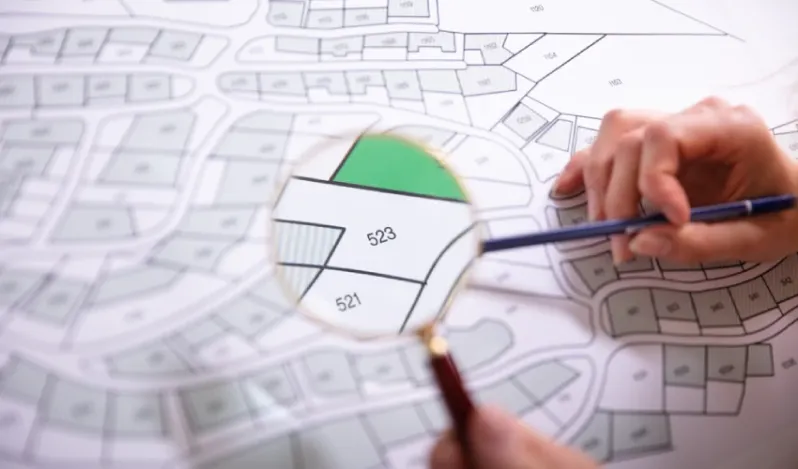
The cadastral record is a more modern and precise system that focuses on linking ownership to the physical property itself rather than just the contract.
Under this system, a dedicated record is created for each property, containing key information such as:
- Exact geographical location
- Actual size and dimensions
- Natural and administrative boundaries
- Plot or map number
- Any rights or obligations attached to it (e.g., easements, mortgages)
This record serves as the ultimate reference in case of disputes. Only the information contained in it is legally recognized, making the cadastral record one of the strongest forms of property protection.
The Difference Between Real Estate Registration and Cadastral Record
- Basis of Registration
- Real estate registration: Relies on the contracts and documents signed by the parties. Officials review the contract and related papers before publicizing it.
Example: If you buy an apartment, the sale contract is recorded at the Real Estate Registration Office after document verification. - Cadastral record: Relies on the property itself as a physical asset, described in detail and tied to the owner’s name in a secure database.
Example: If you own a villa, its full technical and legal details are entered into a dedicated record, ensuring it can only be sold or transferred by the registered owner.
- Level of Legal Protection
- Real estate registration: Provides legal protection by publicizing contracts, but in cases of forged documents or multiple sales, disputes may still require court intervention.
- Cadastral record: Offers stronger protection as the official property record can only be amended through complex judicial procedures, greatly reducing the risk of fraud or duplicate sales.
- Main Objective
- Real estate registration: Primarily aims to publicize legal transactions so all parties are informed.
- Cadastral record: Focuses on securing precise ownership records linked directly to the property.
- Possibility of Modification or Cancellation
- Real estate registration: Can be corrected or canceled if errors or fraud are proven.
- Cadastral record: Extremely difficult to alter and only in exceptional cases, ensuring ownership stability.
Advantages of Real Estate Registration
- Well-known and widely used process: Especially in areas where the cadastral system has not yet been implemented.
- Ensures legal publicity of transactions: Helps prevent disputes over undisclosed property dealings.
- Relatively straightforward procedures: Often does not require extensive field surveys, making it faster in certain cases.
Advantages of the Cadastral Record
- High accuracy: Provides detailed property descriptions that eliminate confusion or overlap in ownership.
- Maximum protection for ownership: Once registered, it is legally impossible to transfer ownership except by the registered owner or their heirs.
- Facilitates property transactions: Buyers and banks can easily verify ownership authenticity.
- Boosts confidence in the real estate market: Encourages safe investments and promotes more buying and selling activity.
Which is Better for Buyers and Investors?
Your choice between real estate registration and cadastral record depends on several factors, including the property’s location, the applicable registration system in the area, and your need for maximum protection.
For investors—especially foreign buyers or those involved in large-scale projects the cadastral record is often the best choice to ensure clarity of ownership and avoid future disputes.
Impact on Saudi Arabia’s Real Estate Market
Saudi Arabia is rapidly moving towards adopting a cadastral-style system due to its benefits in:
- Increasing transparency: Buyers and investors can view all property details before committing.
- Attracting foreign investment: International investors seek stable legal environments that safeguard their assets.
- Reducing disputes: With precise, verified data for each property, conflicts become far less common.
Steps for Real Estate Registration
- Prepare the necessary documents: Such as the sale contract, ID cards, land or building plans, and previous ownership records.
- Visit the relevant registration office: Officials verify document authenticity and ensure the property is dispute-free.
- Pay the required fees: Based on the property’s value or transaction type.
- Publicize the contract: Enter it into the official records so it becomes legally binding on all parties.
Steps for Cadastral Registration
- Apply: Include both property and owner details.
- On-site inspection: Surveyors visit the property to confirm its boundaries, dimensions, and location.
- Enter data into the cadastral record: The property is officially added to its permanent register.
- Issue the ownership certificate: This final, indisputable document confirms legal ownership.
Tips Before Registering Your Property
- Check the legal status: Ensure the property is free of mortgages, liens, or disputes.
- Hire a real estate expert or lawyer: They can verify documentation and ensure the process runs smoothly.
- Choose the right system: For properties in newly developed areas, cadastral registration is often the better option.
When you fully grasp the difference between real estate registration and cadastral records, you can make smarter decisions that provide the highest level of legal protection and secure your investment. This knowledge isn’t just theoretical; it’s a practical safeguard for your assets and financial future.
Secure Your Property with Imtilak Global
At Imtilak Global, we don’t just help you find the best properties in Saudi Arabia—we guide you in choosing the most suitable registration method to fully protect your ownership rights.
Whether you’re looking for an apartment, villa, or land for investment, we provide complete consultations from the first step to receiving your ownership certificate, ensuring transparency and safety in every transaction.
Start your real estate journey with Imtilak Global today, and enjoy peace of mind while seizing profitable opportunities in the Saudi property market.
Do you like this topic? You can share it with your friends now!


Do you like this topic? You can share it with your friends now!
More From Imtilak