Short-term rental in Mecca and Medina
2026-08-12
1,120 Views


Every year, millions of pilgrims and Umrah performers flock to Mecca and Medina, creating a seasonal housing demand unlike any other real estate market in the world. However, the real opportunity is not built in the final weeks before the season. Owning a property qualified to host the guests of Allah requires advance preparation, such as freehold ownership that meets the requirements, legal licensing, and full unit readiness. Those who start now, before the season approaches, reap the full opportunity, while those who wait until the last moments often find themselves out of the competition.
- Why is rental demand in Mecca and Medina exceptional?
- Mecca and Medina are subject to different rules
- Why should you act now and not right before the season?
- Waly Al Ahd Project in Mecca
- Who is eligible for ownership to benefit from this opportunity?
- Seasonal rental vs. traditional annual rental: which is better?
- Frequently asked questions about short-term rentals in Mecca and Medina
Why is rental demand in Mecca and Medina exceptional?
Unlike any other real estate market, demand in the two holy cities combines three recurring peak seasons every year: the Hajj season, Umrah seasons throughout the year—especially Ramadan as an additional peak season—and scattered religious visits all year round. This means that property near the Holy Mosques does not rely on a single season to generate strong returns, but rather on a near-continuous flow of demand, unlike traditional seasonal markets in other cities.
Mecca and Medina are subject to different rules
This fact is often overlooked: furnished residential units in Mecca and Medina are exempt from the general short-term rental regulations applied in other Saudi cities. Instead, during the Hajj season specifically, they are subject to special controls and instructions issued by the Ministry of Hajj and Umrah in coordination with the relevant tourism authorities, including permits for housing pilgrims.
Practically, owning a property qualified to house pilgrims is not just a matter of owning an apartment and renting it out. It requires obtaining specific licenses from the Ministry of Hajj and tourism authorities, and meeting the safety requirements and specifications set by the relevant committees specifically for the Hajj season.
Read also: Apartment prices in Mecca
Why should you act now and not right before the season?
Ownership takes time: Checking eligibility (a reminder that ownership in Mecca and Medina is restricted to Muslims), verifying the geographic area, and completing the purchase and documentation procedures—all these steps require sufficient time before any season.
Licenses are not instant: Obtaining permits to house pilgrims and meeting safety requirements requires prior preparation, not a process that can be completed at the last minute.
Preparing the unit takes time: Furnishing, equipping, and meeting the required specifications (such as capacity, location, and proximity to the Haram) are all factors that determine the unit's actual readiness to receive pilgrims or Umrah performers.
Competition intensifies as the season approaches: The best-located units (such as those directly near the Haram) are booked or bought early by investors and licensed guides who are already prepared. Waiting usually means weaker location options at higher prices.
Waly Al Ahd Project in Mecca
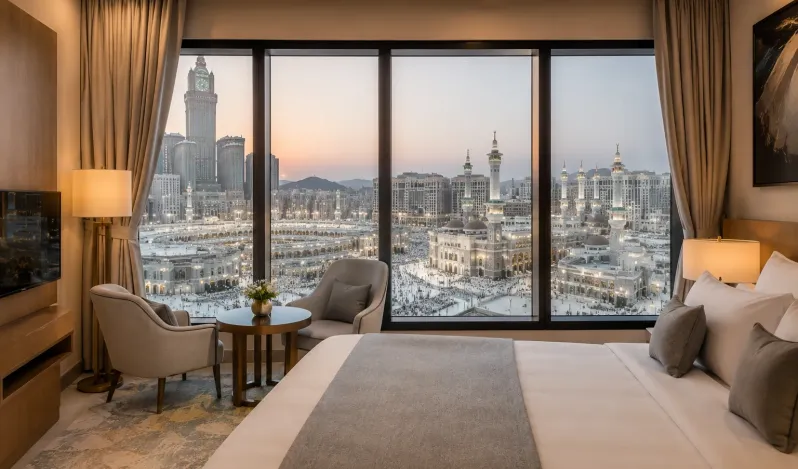
One of the most prominent opportunities that embodies this seasonal advantage is the Waly Al Ahd Project, which is actually located within the boundaries of the Holy Mosque itself. For this unique location, it commands exceptional rental value during peak seasons, as direct proximity to the Haram is the top criterion sought by pilgrims and Umrah performers when choosing their temporary accommodation. Apartments start from 600,000 SAR, with areas up to 183 square meters.
Who is eligible for ownership to benefit from this opportunity?
Since the property is located within Mecca or Medina, the eligibility condition for these two cities applies: ownership is restricted to Muslims, regardless of nationality, within the approved geographic zones. Check your eligibility first before taking any other step, as this is the basic condition that determines whether you can proceed with this opportunity in the first place.
Seasonal rental vs. traditional annual rental: which is better?
Before committing to the path of short-term seasonal rental, it is worth a realistic comparison:
Seasonal rental (Hajj/Umrah/Ramadan): Higher potential returns during peak periods, but it requires more active operational management (marketing, reception, frequent maintenance), and a special permit for housing pilgrims.
Traditional annual rental: More stable returns and less operational complexity, but it does not fully capitalize on the very high seasonal demand peaks in Mecca and Medina specifically.
Many owners adopt a mixed model by renting annually for most of the year, then switching to licensed seasonal rental during peak periods (Hajj and Ramadan) to maximize returns without sacrificing year-round stability.
Read also: Ready-to-move apartments for sale in Mecca
At Imtilak Global, we help you act early by checking your eligibility for ownership in Mecca or Medina, choosing the best location to maximize seasonal returns, and guiding you regarding the licensing requirements for housing pilgrims and Umrah performers. Don't wait until the season approaches—early planning is what truly makes a difference in this market.
Frequently asked questions about short-term rentals in Mecca and Medina
Does renting my apartment to pilgrims require a special permit?
Yes, permits for housing pilgrims are granted by the Ministry of Hajj and Umrah and the relevant tourism authorities, and are not subject to the general short-term rental system applied in other cities.
When should I start preparing for the next Hajj season?
The earlier, the better. Ownership, licensing, and preparing the unit all require sufficient time, and it is not recommended to wait until the last weeks before the season.
Can I rent out my property in Mecca on a daily basis throughout the year, not just during Hajj?
Yes, demand for Umrah continues year-round with an additional peak in Ramadan, which allows for almost continuous rental income, unlike relying solely on the Hajj season.
Can a non-Muslim invest in a rental property in Mecca or Medina?
No, ownership in the two holy cities is restricted to Muslims only, regardless of nationality.
What is the advantage of direct proximity to the Haram for seasonal rental specifically?
Proximity to the Haram is the top criterion sought by pilgrims and Umrah performers, making properties like the Waly Al Ahd Project (within the boundaries of the Haram itself) the most in-demand and highest in rental value during peak seasons.
Do you like this topic? You can share it with your friends now!


Do you like this topic? You can share it with your friends now!